The AI effect: why solved problems stop being called AI
The AI effect is the tendency to stop labeling a problem as artificial intelligence once it is solved. Chess programs illustrate this: after Deep Blue and AlphaZero beat champions, chess software became routine. The phenomenon reflects the field's progress and shifts the definition of AI to unsolved challenges.

The AI effect and the definition of AI
The AI effect describes a recurring pattern: a task that was once considered a hallmark of artificial intelligence loses that label as soon as a computer system reliably performs it. The act of solving the problem makes the solution seem ordinary.
The Stanford Encyclopedia of Philosophy notes that the field officially started in 1956 at a conference where the term 'artificial intelligence' was coined, alongside the Logic Theorist, a program that could prove elementary theorems. the Stanford Encyclopedia entry
This historical event illustrates that the field's identity has always been tied to unsolved problems, so once a problem is solved, it stops being seen as AI.
Chess: a textbook case
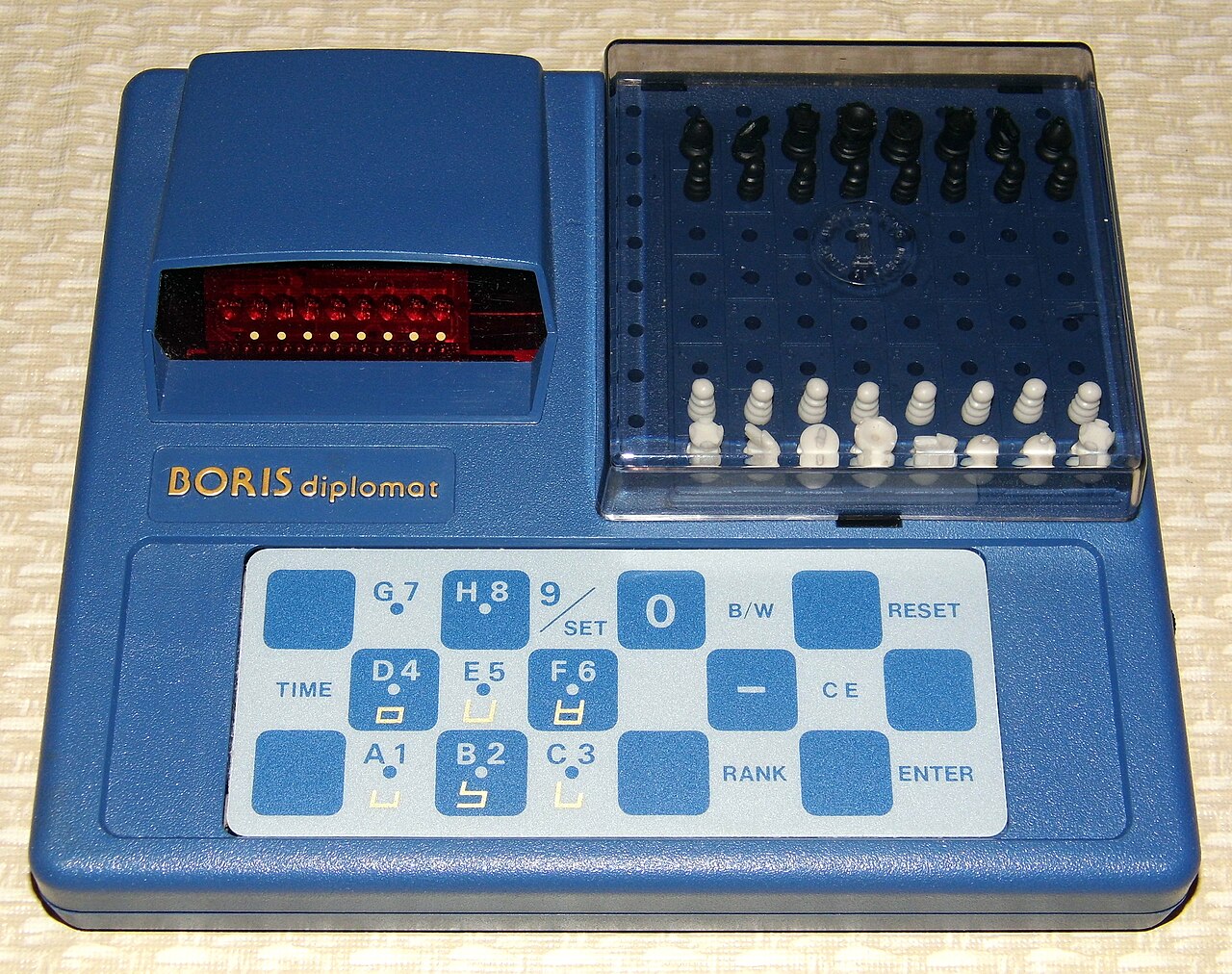
Chess offers a clear illustration. For decades, chess was viewed as a prime test of human intelligence. IBM's Deep Blue became the first computer system to defeat a reigning world chess champion under standard tournament controls, using 32 processors to evaluate 200 million chess positions per second. Deep Blue's history at IBM
Later, AlphaZero, described in an arXiv paper, achieved superhuman performance in chess, shogi, and Go by starting from random play and given no domain knowledge except the game rules. It used reinforcement learning from self-play to reach that level within 24 hours. the AlphaZero paper
After these successes, chess programs are rarely cited as examples of AI. Instead, they are seen as sophisticated but conventional software. The challenge that once defined the field had been absorbed into routine computing.
Why solved problems lose the AI label
The AI effect is closely connected to how the field defines itself. IBM's overview defines AI as technology that enables computers to simulate human learning, comprehension, problem solving, decision making, creativity and autonomy. IBM's What is AI overview
When a system accomplishes a task that humans find difficult, it is natural to attribute that success to the program's design rather than to artificial intelligence. Over time, the techniques become familiar and are implemented in standard libraries and tools, making the AI label seem unnecessary.
This pattern is visible across the history of computing. Early programs that played chess or solved logic puzzles were celebrated as AI, but once they became widely deployed, they were reclassified as ordinary applications.
The moving target of AI
The AI effect keeps the term 'artificial intelligence' attached to the hardest unsolved problems. As the IBM history of artificial intelligence describes, the field has evolved from early attempts at programmable devices to modern machine learning and generative models that can produce original content. Each stage has redefined what counts as AI. IBM's history of AI
For now, tasks like natural language conversation, image generation, and autonomous driving remain contested territory. But as these problems get solved, they too may be reclassified. The AI effect is thus a sign of progress: each solved problem expands the ordinary computing toolbox and moves the boundary of artificial intelligence to the next challenge.
| Aspect | Deep Blue | AlphaZero |
|---|---|---|
| Approach | Brute-force parallel search | Self-play reinforcement learning |
| Domain knowledge | Handcrafted evaluation functions | Only the game rules |
| Learning | None, fixed program | Learned from self-play games |
| Result | Defeated world champion in a match | Superhuman in chess, shogi, and Go |
Frequently asked questions
What is the AI effect?
The AI effect is the tendency to stop labeling a problem as artificial intelligence once it is solved, because the solution becomes ordinary technology.
Why is chess no longer considered AI?
After Deep Blue and AlphaZero defeated champions, chess programs became routine software and lost the AI label.
What causes the AI effect?
The definition of AI is tied to unsolved problems; when a technique becomes familiar and widely applied, it is reclassified as conventional computing.
Does the AI effect mean AI is not real?
No, it indicates progress: each solved problem expands ordinary computing, while unresolved challenges keep the AI label.