The deep learning revival: data, GPUs and the results that changed AI
Deep learning experienced a revival driven by three factors: large labeled datasets, high-performance GPUs, and a breakthrough result on the ImageNet challenge. The AlexNet paper demonstrated that deep convolutional neural networks could dramatically outperform traditional methods, sparking widespread adoption. This revival laid the foundation for modern AI applications including computer vision, generative AI, and autonomous systems.

The data revolution: ImageNet
The ImageNet project, created by researchers at Stanford University and Princeton University, provides a large-scale labeled image database with 14,197,122 images and 21,841 synsets, organized according to the WordNet hierarchy. The ImageNet database has been instrumental in advancing computer vision and deep learning research. Before ImageNet, most datasets were too small to train deep neural networks without overfitting.
The ImageNet Large Scale Visual Recognition Challenge (ILSVRC) became a standard benchmark for comparing algorithms. The challenge used 1.3 million training images and 1000 classes, as described in the NeurIPS paper later.
The hardware catalyst: GPUs
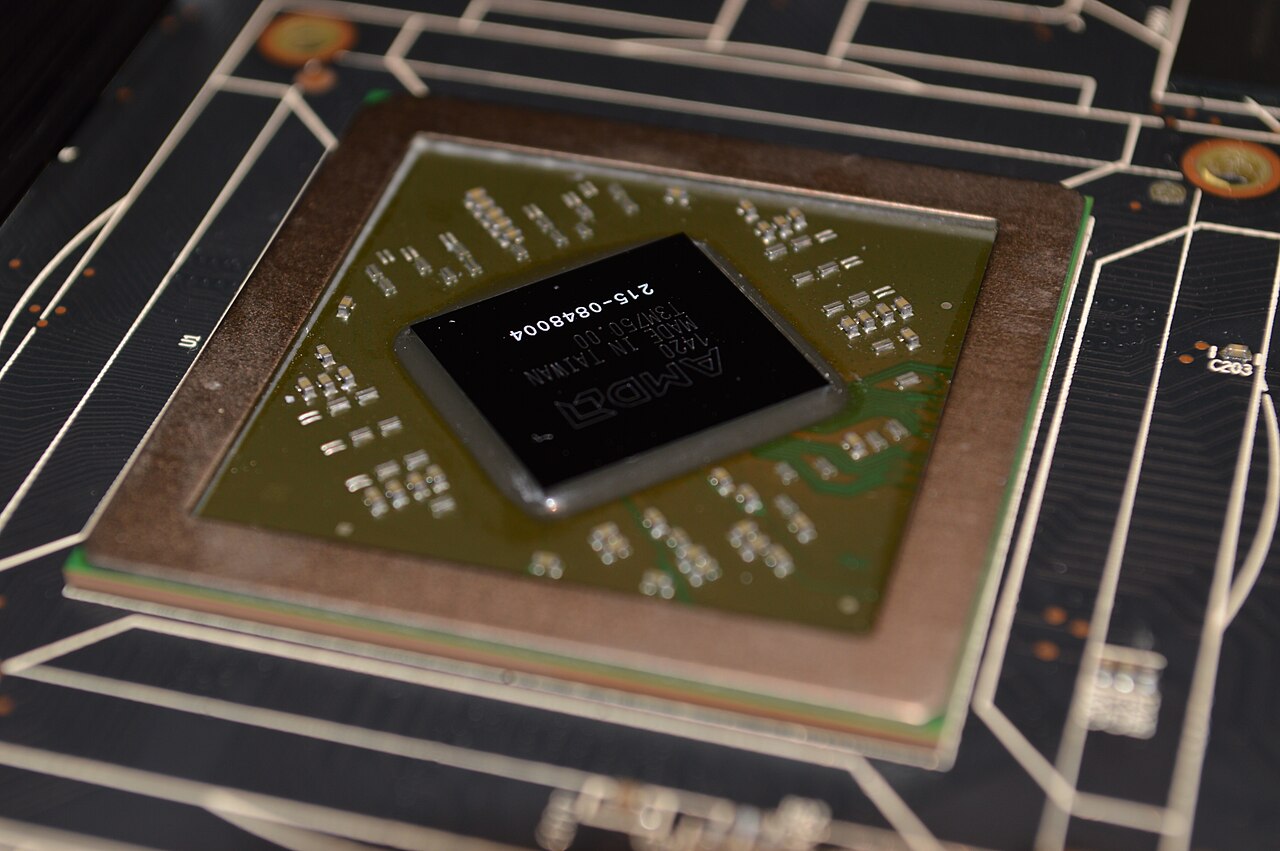
Training deep neural networks requires massive computational power. According to IBM's deep learning explanation, advancements in high-performance graphics processing units (GPUs) enabled parallel processing of the many computational steps needed for deep learning. GPUs, originally designed for rendering graphics, proved highly effective for the matrix operations central to neural network training.
For a more detailed look at the specific hardware options available, readers can consult a graphics card guide. The guide provides information on graphics cards for gaming and AI, helping users understand the trade-offs between different models and architectures.
The breakthrough result: AlexNet
A landmark paper presented at a NeurIPS conference described a deep convolutional neural network trained on the ImageNet dataset. According to the NeurIPS proceedings, the authors achieved top-1 and top-5 error rates of 39.7% and 18.9% respectively, considerably better than previous best results. The network had 60 million parameters and 500,000 neurons, with five convolutional layers and two globally connected layers.
The paper emphasized the use of a very efficient GPU implementation to make training faster. This result demonstrated that deep learning could solve complex visual recognition tasks at a level that traditional machine learning could not match. The breakthrough sparked a wave of interest and investment in deep learning.
Broader impact and recognition
The revival of deep learning led to its dominance in many AI fields. According to IBM's comparison of AI terms, deep learning is a subfield of machine learning, and neural networks form the backbone of deep learning algorithms. Deep learning now powers many leading AI applications from computer vision and generative AI to self-driving cars.
The significance of these contributions was recognized with a Nobel Prize in Physics. The Nobel Prize summary states that the prize was awarded jointly to John Hopfield and Geoffrey Hinton for breakthroughs that made machine learning with artificial neural networks possible. The popular science background explains that Hinton invented a method that can independently discover properties in data, which has become important for large artificial neural networks.
| Pillar | Role | Example |
|---|---|---|
| Large datasets | Provide enough examples to train deep networks without overfitting | ImageNet with 14,197,122 images |
| Powerful GPUs | Enable parallel computation for fast training of large models | GPU implementation used in AlexNet training |
| Deep neural network algorithms | Allow learning complex hierarchical features from data | Convolutional neural network with multiple layers |
Frequently asked questions
What is deep learning?
Deep learning is a subset of machine learning that uses multilayered neural networks with multiple layers to learn complex patterns from data. Deep learning models are inspired by the structure of the human brain and require large amounts of data and computational resources for training.
What role did GPUs play in the deep learning revival?
GPUs provided the parallel processing power needed to train deep networks efficiently. The IBM article on deep learning notes that advancements in high-performance GPUs enabled the breakthrough of deep learning in that era.
What is ImageNet?
ImageNet is an image database with 14,197,122 images and 21,841 synsets, organized according to the WordNet hierarchy. It has been instrumental in advancing computer vision and deep learning research and is available free for non-commercial use.
What was the AlexNet result?
AlexNet achieved top-1 and top-5 error rates of 39.7% and 18.9% on the ImageNet test set, considerably better than previous best results. The network had 60 million parameters and used a GPU implementation for training.
Who received the Nobel Prize in Physics for contributions to machine learning?
John J. Hopfield and Geoffrey Hinton were awarded the Nobel Prize in Physics for foundational discoveries and inventions that enable machine learning with artificial neural networks.