Logic and automated reasoning: how AI derives conclusions from rules
Automated reasoning systems use logic to derive conclusions from rules. They combine a knowledge base that stores structured information with an inference engine that applies deduction. Classical deductive logic is common, while fuzzy logic and nonmonotonic logic handle uncertainty.
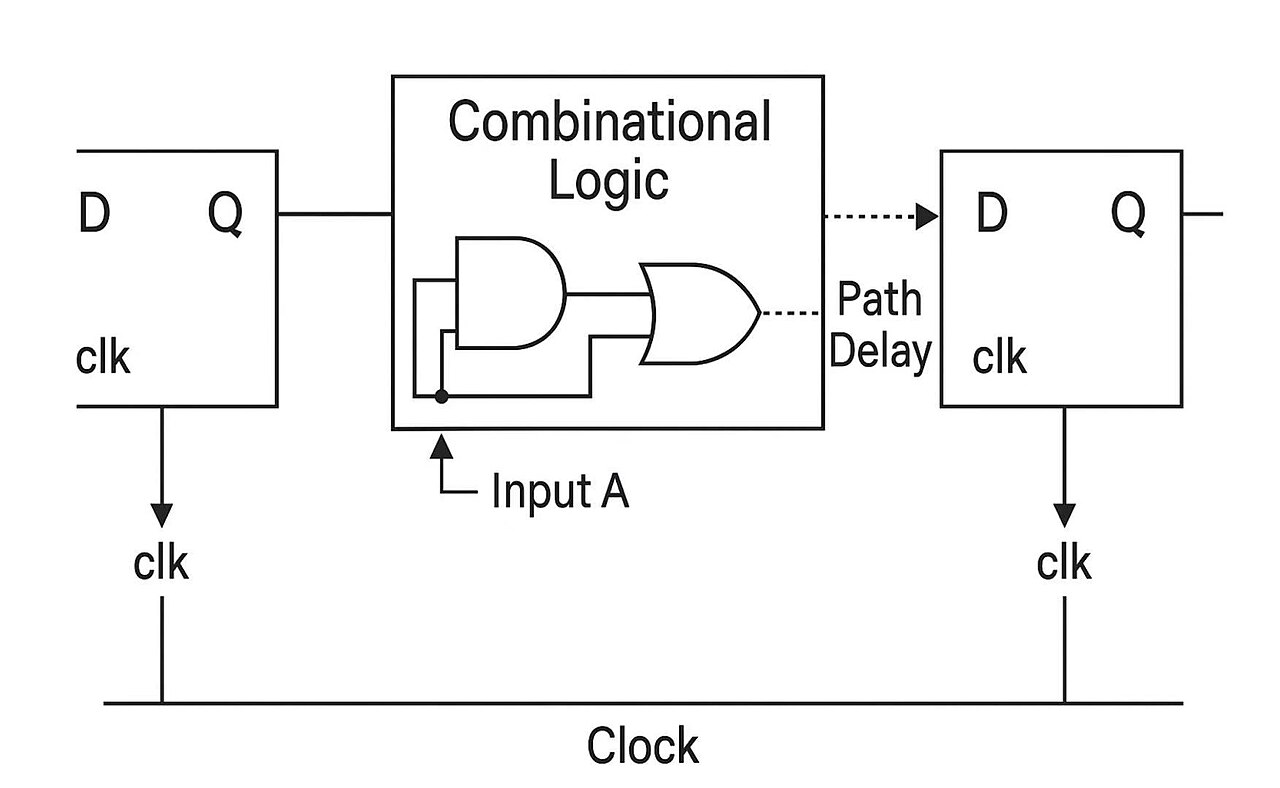

Logic and Automated Reasoning
Automated reasoning is the construction of computing systems that make inferences, and the term is largely identified with valid deductive reasoning as practiced in formal logic, as described in the Stanford Encyclopedia of Philosophy's article on automated reasoning.
In this framework, a problem consists of a set of assumptions and a conclusion, and the reasoning program applies rules of deduction to prove the conclusion. The process ends when a proof is found, when the program detects that no proof exists, or when it exhausts its computational resources.
The role of logic in artificial intelligence has been significant since early AI research. John McCarthy proposed using philosophical logic to formalize commonsense reasoning, according to the Stanford Encyclopedia of Philosophy's entry on logic-based AI.
Knowledge Base and Inference Engine
A reasoning system typically consists of two core components: a knowledge base and an inference engine, as explained by IBM's article on reasoning in AI.
The knowledge base contains structured knowledge representations such as knowledge graphs, ontologies, and semantic networks. The inference engine, powered by trained machine learning models, implements the logic and reasoning methods to analyze data and reach a decision.
IBM describes an autonomous robotic floor cleaner as an example: its knowledge base holds information about floor types and cleaning requirements, and its machine learning algorithms classify floors to decide whether to vacuum or mop.
Deductive Reasoning and Logical Agents
Logical agents represent knowledge in formal languages such as first-order logic and perform inference to derive new facts. The textbook Artificial Intelligence: A Modern Approach covers logical agents and inference in first-order logic as core topics.
Deductive reasoning is a common method in these systems: it draws specific conclusions from general rules, guaranteeing certainty if the premises hold. Expert and rule-based systems often implement deductive inference, although the certainty of their conclusions depends on the accuracy of their knowledge base.
Fuzzy and Many-Valued Logics
Fuzzy logic models reasoning with vague statements by assigning degrees of truth to propositions. According to the Stanford Encyclopedia of Philosophy's entry on fuzzy logic, the standard truth values are real numbers in the interval from zero to one, where zero is totally false and one is totally true.
In fuzzy logic, connectives such as conjunction and disjunction are truth-functional, often using minimum and maximum operations. This approach allows systems to handle partial truth and is used in control and classification problems.
Applications and Education
The MIT OpenCourseWare course on artificial intelligence introduces students to knowledge representation, problem solving, and learning methods, showing how reasoning systems are assembled from computational components.
Through such courses, learners understand the role of knowledge and inference in building intelligent systems. The curriculum covers topics like logical agents and planning, providing a practical basis for implementing reasoning systems.
| Reasoning type | Definition | Typical application |
|---|---|---|
| Deductive | Draws specific conclusions from general facts | Expert systems and rule-based systems |
| Abductive | Finds the most likely conclusion from observations | Diagnostic algorithms |
| Analogical | Transfers knowledge from similar past situations | Problem solving and learning |
| Commonsense | Uses everyday practical knowledge about the world | Decision making in natural language systems |
| Fuzzy | Uses degrees of truth to handle vague statements | Control and classification systems |
Frequently asked questions
What is automated reasoning?
Automated reasoning is the development of computing systems that make inferences, focused on valid deductive reasoning in formal logic, where a program proves conclusions from assumptions.
How does an inference engine work?
An inference engine applies logic and reasoning methods to data from a knowledge base to reach a decision, using techniques such as deductive, inductive, or fuzzy reasoning.
What is the difference between deductive and abductive reasoning?
Deductive reasoning starts from general rules to derive specific conclusions that are guaranteed true if the rules are correct. Abductive reasoning starts from observations and seeks the most likely explanation or conclusion.
What is fuzzy logic used for?
Fuzzy logic handles vague statements by assigning degrees of truth between zero and one, allowing systems to reason with partial information, commonly used in control and classification.