The Dartmouth workshop: the 1956 project that named AI
The Dartmouth Summer Research Project on Artificial Intelligence, held in 1956, is widely regarded as the founding event of AI as a research field. Organized by John McCarthy, it brought together ten researchers who proposed that machine simulation of every aspect of learning was possible. The term 'artificial intelligence' was coined at the conference, and attendees presented early programs such as Logic Theorist.
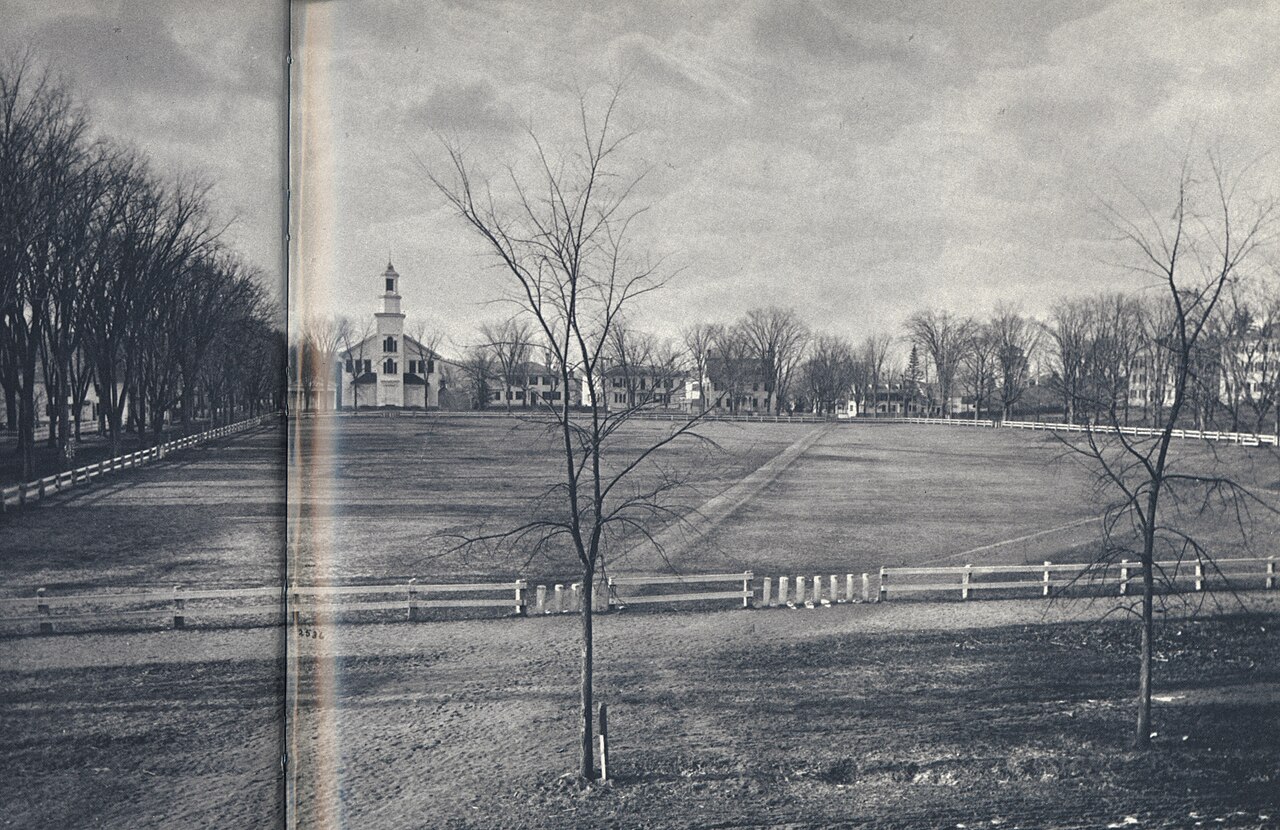

Background and the proposal
Long before the Dartmouth conference, the idea of machines that could think or generate text appeared in fiction and early computing. For instance, Jonathan Swift's 1726 novel Gulliver's Travels described a mechanical engine designed to combine words into new books and philosophical treatises, as recounted by IBM's history of AI.
In 1956, John McCarthy, then at Dartmouth College, organized a summer research project to explore the possibility of machine intelligence. In his proposal, as stated by Dartmouth College's overview, he conjectured that every aspect of learning or any other feature of intelligence could be so precisely described that a machine could be made to simulate it.
The ten thinkers
The conference gathered ten researchers, including McCarthy, Claude Shannon, Marvin Minsky, Arthur Samuel, Trenchard Moore, Ray Solomonoff, Oliver Selfridge, Allen Newell, and Herbert Simon, according to the Stanford Encyclopedia of Philosophy.
During the meeting, the term 'artificial intelligence' was coined, as the same entry notes. Although some attendees disliked the name, it became the standard label for the field.
Logic Theorist and early achievements
One of the conference's key demonstrations was Logic Theorist, a program developed by Allen Newell, Herbert Simon, and J.C. Shaw. The Computer History Museum's timeline records that they began work on it in 1955 and that it proved theorems from Principia Mathematica, introducing concepts such as heuristics and reasoning as search.
At the Dartmouth meeting, Newell and Simon presented Logic Theorist, and attendees considered it a remarkable achievement. The program demonstrated that machines could perform symbolic reasoning, a foundational idea for AI.
Legacy and impact
The Dartmouth conference is now viewed as the official starting point of artificial intelligence as a discipline. The Computer History Museum's revolution exhibit notes that computers provide the sophistication needed for human-like behavior, though making machines truly think like people has remained elusive.
Since then, attempts to build intelligent machines have produced a wide range of useful products and services, as the exhibit also observes. The field has grown far beyond the summer project, but the foundational questions posed in 1956 continue to shape research.
| Attribute | Detail |
|---|---|
| Organizer | John McCarthy |
| Year | 1956 |
| Location | Dartmouth College, Hanover, New Hampshire |
| Number of attendees | Ten |
| Key outcome | Term 'artificial intelligence' coined |
| Featured program | Logic Theorist |
Frequently asked questions
Who organized the Dartmouth workshop?
John McCarthy organized the event, which took place in 1956 at Dartmouth College.
How many researchers attended the conference?
Ten people attended, including McCarthy, Shannon, Minsky, Samuel, Moore, Solomonoff, Selfridge, Newell, and Simon.
What was the stated goal of the project?
The proposal stated that every aspect of learning or other features of intelligence could be precisely described so that a machine could simulate it.
What was Logic Theorist?
Logic Theorist was a program by Newell, Simon, and Shaw that proved theorems from Principia Mathematica and was introduced at the conference.