A history of AI from early logic programs to modern systems
The article traces artificial intelligence from early theoretical foundations, including Turing's test and the neuron model, through the Dartmouth conference, Deep Blue's chess victory, and AlphaGo's Go achievement.
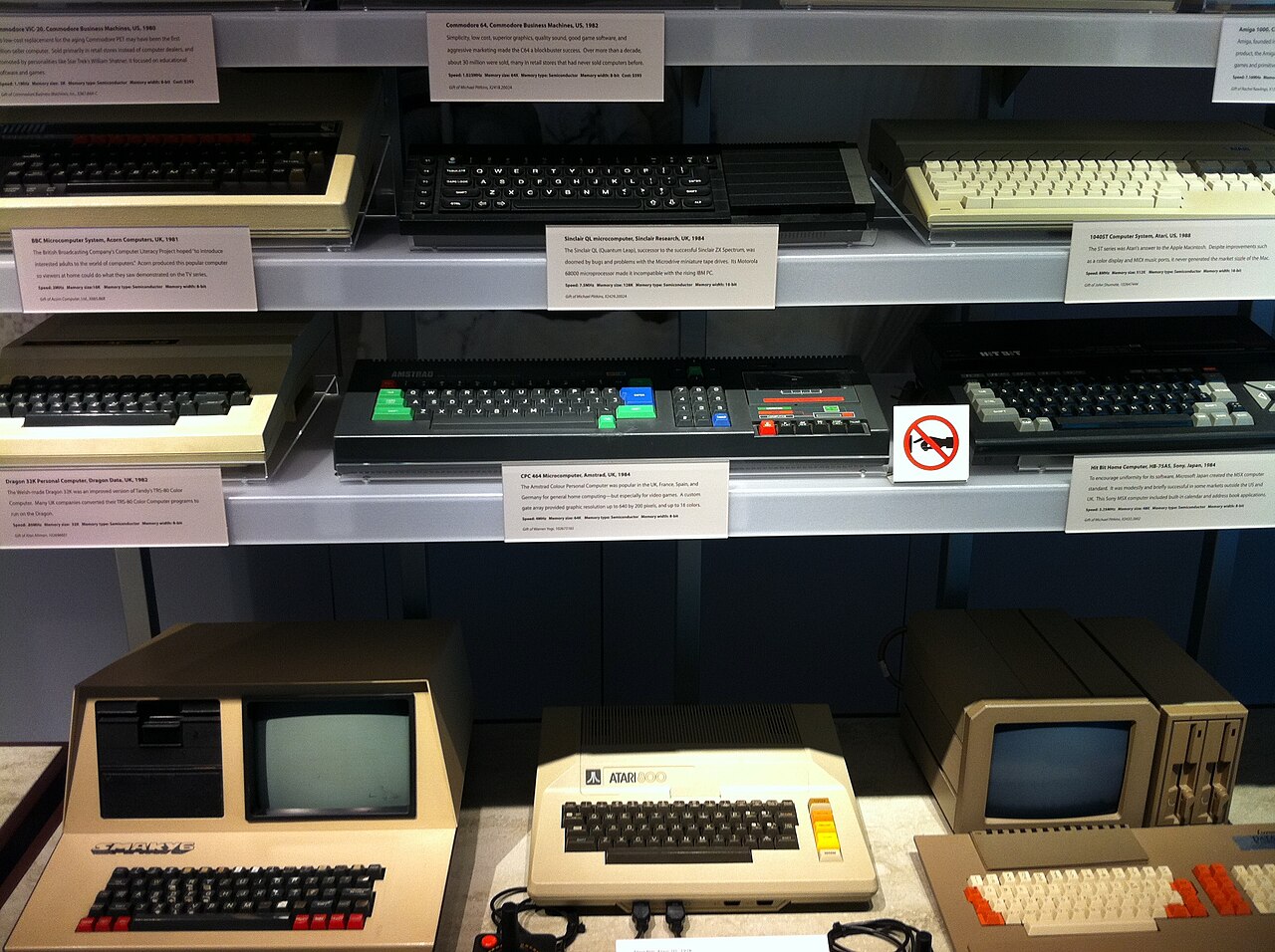

Early Ideas and Theoretical Foundations
The idea of creating thinking machines appears in fiction long before modern computers. Jonathan Swift's Gulliver's Travels, for instance, described a mechanical contraption that rearranges word blocks into new sentences and books, an early anticipation of algorithmic text generation. IBM's history of AI notes this as one of many historical precursors.
Alan Turing laid theoretical foundations for AI in his 1936-7 paper, which introduced the concept of a universal computing machine. In his 1950 paper, he proposed a test based on linguistic indistinguishability: a machine could be deemed intelligent if its written responses were indistinguishable from a human's. Stanford Encyclopedia of Philosophy's entry on Turing describes this as a foundational contribution.
In 1943, Warren McCulloch and Walter Pitts published a paper proposing a simplified computational model of neurons. Computer History Museum's AI timeline records this as a foundational work for artificial neural networks.
The Field of AI Emerges
The 1956 Dartmouth conference is widely regarded as the official birth of artificial intelligence as a field. At that summer workshop, John McCarthy and others coined the term 'artificial intelligence,' and Allen Newell and Herbert Simon presented Logic Theorist, a program that proved elementary theorems. Stanford Encyclopedia of Philosophy's AI entry recounts this event and highlights Logic Theorist's use of 'reasoning as search.'
Computer History Museum's revolution page observes that although machines have not yet truly replicated human thought, the ongoing attempts have yielded a wide range of beneficial products and services.
Computational Chess Milestones
IBM's Deep Blue, described in IBM's Deep Blue history page, used 32 processors to evaluate 200 million chess positions per second. It achieved a rare milestone: beating a reigning world chess champion in a match under standard tournament controls.
Deep Blue's victory over Garry Kasparov demonstrated that brute-force computational search could tackle a complex strategic game, and the underlying technology later contributed to applications in data analysis and optimization.
Learning from Self-Play: AlphaGo
Google DeepMind's AlphaGo defeated Lee Sedol, a world champion in the game of Go. AlphaGo combined deep neural networks with advanced search algorithms, using a policy network to select moves and a value network to predict winners. It first learned from thousands of expert games, then improved through reinforcement learning by playing against itself. DeepMind's AlphaGo research page describes the system and its successors AlphaZero and MuZero.
The match was watched by over 200 million people and was considered a decade ahead of expert expectations. AlphaGo's inventive moves, such as the now-famous Move 37, caused many players to reassess traditional strategies, and the victory highlighted the shift from hand-crafted rules to learning-based approaches in AI.
| Milestone | Significance |
|---|---|
| McCulloch and Pitts publish a logical calculus of nervous activity | Foundation for artificial neural networks |
| Alan Turing proposes the Turing test | Operational definition of machine intelligence |
| Dartmouth conference | Field of AI named and launched |
| Deep Blue defeats a world chess champion | First computer win over a reigning champion |
| AlphaGo defeats a Go world champion | Demonstration of deep reinforcement learning |
Frequently asked questions
What is the Turing test?
Alan Turing proposed in 1950 that a machine could be considered intelligent if its written responses could not be distinguished from a human's by a judge on the basis of textual conversation.
Who coined the term artificial intelligence?
The term was coined at the 1956 Dartmouth conference, according to the Stanford Encyclopedia of Philosophy.
How did Deep Blue beat a world chess champion?
Deep Blue used 32 processors to evaluate 200 million chess positions per second, relying on brute-force search to defeat Garry Kasparov.
How did AlphaGo learn to play Go?
AlphaGo combined deep neural networks with advanced search algorithms, training on expert games and improving through reinforcement learning from self-play.
What was the significance of the Dartmouth conference?
It launched AI as a recognized field and brought together researchers who shaped its early directions.