Robotics and AI: perception, planning and control in physical machines
Robotics combines AI for perception, planning, and control to let machines act in the physical world. Research institutes and learning-based models advance these capabilities, from classical sensor-based control to end-to-end trained neural networks. The field spans diverse applications, including manipulation and real-world control.
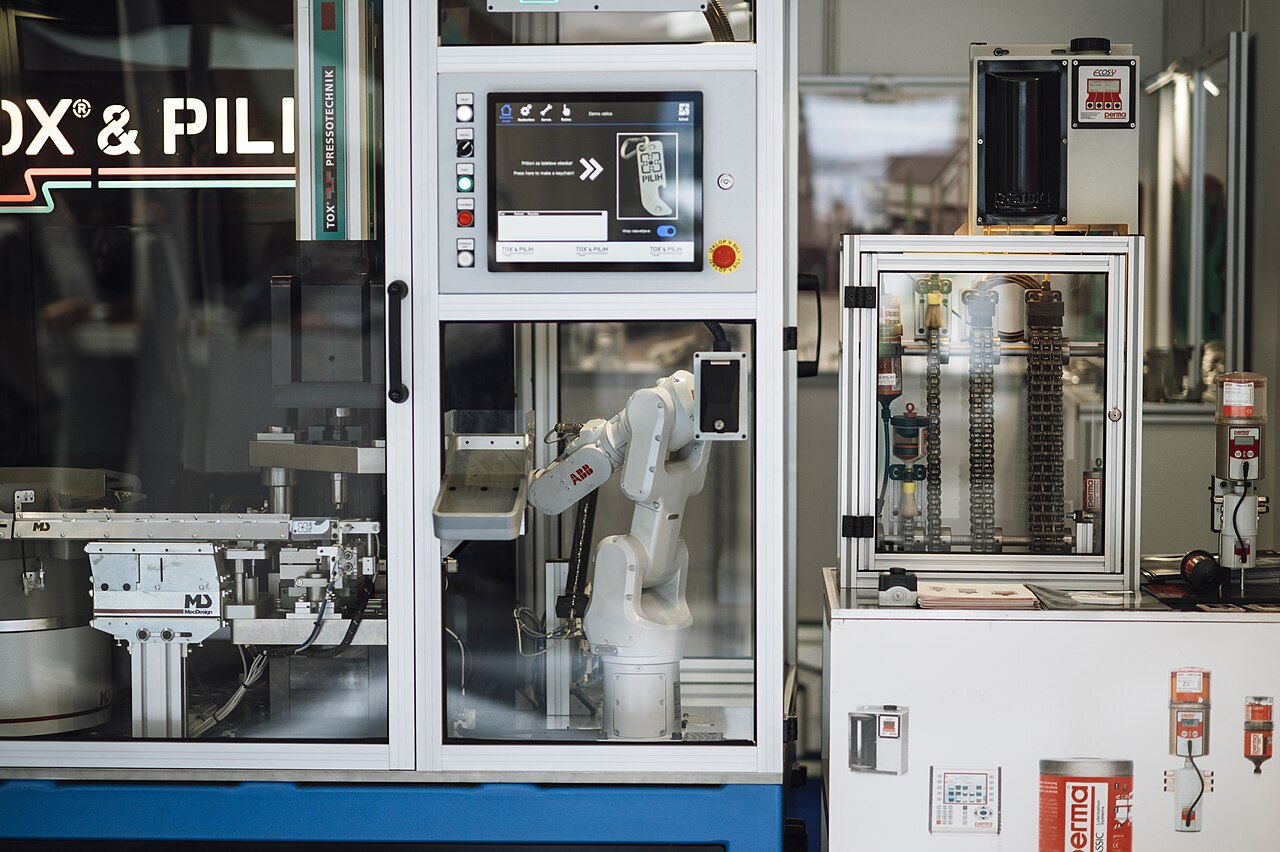

The role of AI in robotics
Robotics is the field of systems that incorporate sensors and actuators to operate autonomously or semi-autonomously, often in cooperation with humans. The IEEE Robotics and Automation Society defines robotics as focusing on systems that emphasize intelligence and adaptability to cope with unstructured environments, while automation focuses on efficiency and reliability in structured environments (see the IEEE RAS mission).
AI contributes to robotics by enabling perception, planning, and control. These functions allow a robot to sense its surroundings, decide what to do, and execute physical actions. The integration of AI principles is central to modern robotics research, as seen in the interdisciplinary work at institutions like Carnegie Mellon University and MIT.
Perception and understanding the world
Perception in robotics involves converting raw sensor inputs, such as images, lidar, or touch, into usable representations. MIT's robotics groups pursue a wide range of perceptual research, including the Perceptual Science Group and the SPARK Lab, which focus on sensing and autonomy (see the MIT robotics groups).
Carnegie Mellon University's Robotics Institute also conducts research in computer vision and machine learning as part of its core robotics work, alongside manipulation and locomotion (see the CMU Robotics Institute about page).
Effective perception is critical for tasks that require close coordination between vision and control, such as manipulating objects or navigating dynamic environments. Advances in deep learning have greatly improved the ability of robots to interpret raw visual data directly.
Planning and control
Planning refers to the process of determining a sequence of actions to achieve a goal, while control involves executing those actions in real time. Traditional robotics often separates these components, using hand-crafted representations for state estimation and low-level control.
One approach to simplify planning and control is to train policies that map observations directly to motor commands. For example, a research paper describes a method that learns policies from raw image observations to torques at the motors, using deep convolutional neural networks with 92,000 parameters (see the end-to-end visuomotor policy paper).
This end-to-end training can outperform separate component training in tasks like screwing a cap onto a bottle, demonstrating that joint optimization of perception and control can be beneficial.
Learning-based robotics and large models
Modern robotics increasingly uses machine learning to improve generalization across tasks. The RT-1 Robotics Transformer model was designed to exhibit scalable properties by training on large-scale, task-agnostic robotic data, and it showed that model size and data diversity improve performance (see the RT-1 paper).
A follow-up, RT-2, extends this idea by incorporating vision-language models trained on Internet-scale data directly into robotic control. The model expresses actions as text tokens and co-fine-tunes on both robotic trajectories and vision-language tasks, enabling emergent semantic reasoning such as interpreting new commands and performing multi-step reasoning (see the RT-2 paper).
These developments illustrate how AI models can transfer knowledge from web data to physical control, improving the ability of robots to handle novel objects and user requests.
The research community and standards
Robotics research is supported by professional societies and academic institutions. The IEEE Robotics and Automation Society fosters the exchange of scientific knowledge in robotics and automation, and Carnegie Mellon University established the world's first Robotics PhD program to educate future leaders in the field.
Universities like MIT and Carnegie Mellon host diverse robotics laboratories and offer educational programs. The field continues to evolve, with research groups exploring everything from biomimetic robots to marine systems, as listed on MIT's robotics page.
These efforts collectively advance the theory and practice of robotics and AI, making physical machines more capable and adaptable.
| Model | Task | Key Innovation |
|---|---|---|
| End-to-end visuomotor | Learn control from raw images | Maps images directly to motor torques |
| RT-1 | Real-world control at scale | Scalable transformer for diverse robotic data |
| RT-2 | Robotic control with semantic reasoning | Uses vision-language models, actions as text tokens |
Frequently asked questions
What is the role of AI in robotics?
AI provides methods for perception, planning, and control, enabling robots to interpret sensor data, decide actions, and execute them physically.
How does perception differ from planning?
Perception interprets sensory input into meaningful representations, while planning determines a sequence of actions to achieve a goal based on that interpretation.
What is end-to-end learning in robotics?
End-to-end learning trains a single model to map raw sensor observations directly to motor commands, avoiding separate hand-crafted perception and control stages.
What are vision-language-action models?
These models combine vision and language pretraining with robotic actions, allowing robots to generalize from web data and perform semantic reasoning during control.
Why are research institutes important for robotics?
They conduct basic and applied research, educate roboticists, and develop technologies that advance the field's capabilities and applications.