Protein structure prediction: how AlphaFold-style models work
AlphaFold is an artificial intelligence system from Google DeepMind that predicts a protein's three-dimensional shape from its amino acid sequence, with accuracy comparable to experimental methods. It was recognized as a solution to the long-standing protein folding problem at the CASP14 experiment. The AlphaFold Protein Structure Database provides open access to over 200 million predicted structures.
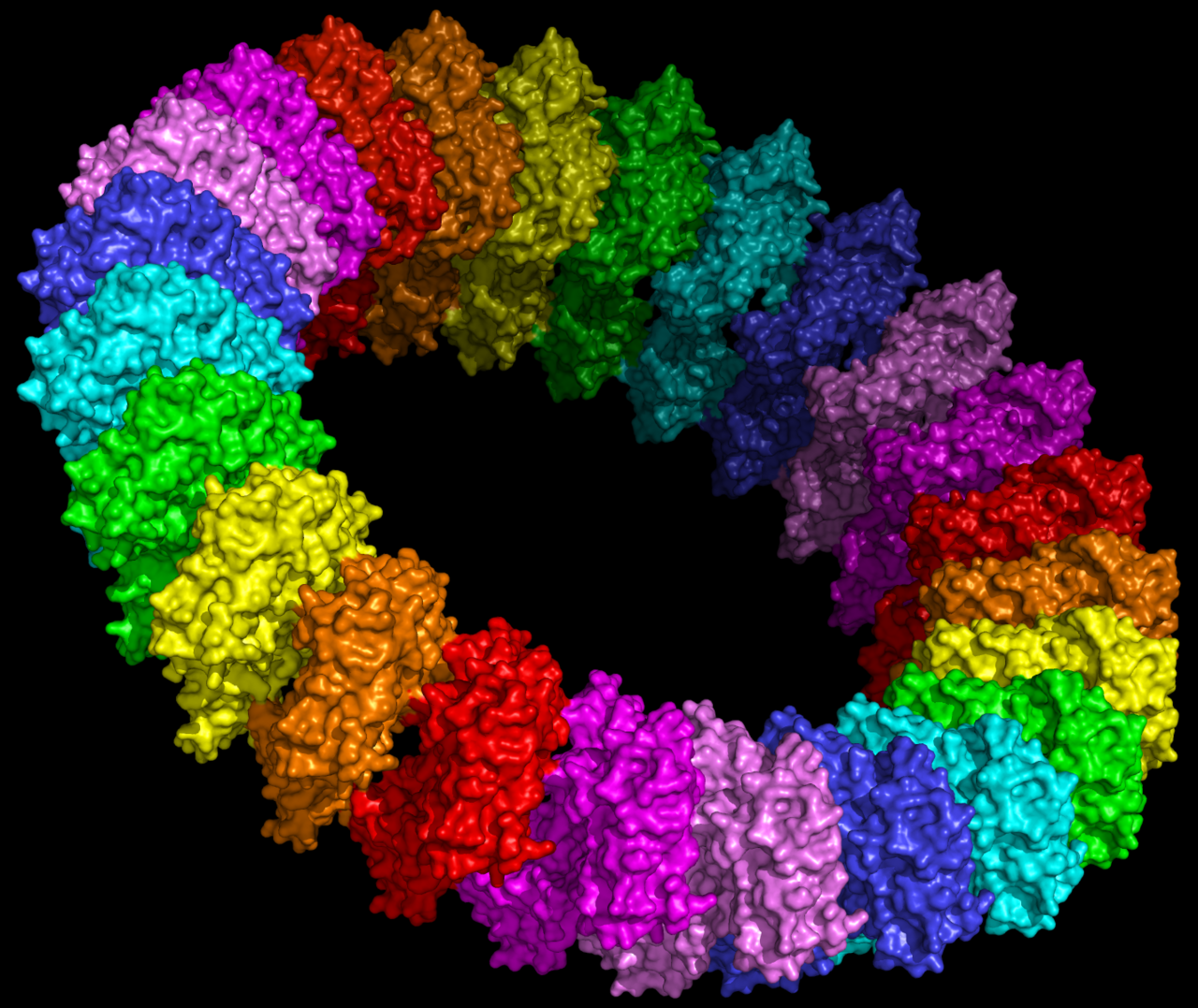

The protein folding problem
Proteins are chains of amino acids that fold into unique three-dimensional shapes, which determine their function. Knowing a protein's structure is essential for understanding its role in biological processes, but determining it experimentally can take years and significant resources. The challenge of predicting a protein's 3D structure from its amino acid sequence alone is known as the protein folding problem, a goal pursued since the 1970s.
Experimental methods like X-ray crystallography and cryo-electron microscopy provide accurate structures, but they are time-consuming and not always feasible for every protein. Computational prediction aims to fill this gap by offering fast, scalable alternatives. The RCSB PDB-101 guide to understanding PDB data explains that the PDB archive stores experimentally determined structures, while computed structure models are a separate category of data.
The Critical Assessment of Protein Structure Prediction (CASP) is a biennial community experiment that benchmarks prediction methods. According to the Protein Structure Prediction Center's CASP experiments page, CASP14 marked an extraordinary increase in accuracy with the emergence of AlphaFold2, which produced models competitive with experimental accuracy for about two-thirds of targets.
How AlphaFold works
AlphaFold is an AI system created by Google DeepMind that takes a protein's amino acid sequence as input and outputs a predicted 3D structure. It regularly achieves accuracy competitive with experiment, as described in the EMBL-EBI AlphaFold online training course. The model uses deep learning to infer the spatial relationships between amino acids, effectively learning the rules of protein folding from known structures.
The system processes the input sequence through multiple neural network layers, generating a predicted structure along with confidence scores. These scores help researchers evaluate the reliability of different parts of the prediction. The Google DeepMind AlphaFold page notes that AlphaFold solved the protein folding problem, predicting structures in minutes to a remarkable degree of accuracy.
AlphaFold's methodology was published in Nature, and the code was open-sourced. This transparency allowed the scientific community to build upon the method, leading to further improvements and adaptations such as AlphaFold-Multimer for protein complexes.
Validation and impact
AlphaFold's predictions have been validated against experimentally determined structures in CASP competitions. At CASP14, AlphaFold2 won by a large margin, with a median error of less than 1 Angstrom, three times more accurate than the next best system. The Nobel Prize press release for Chemistry states that Demis Hassabis and John Jumper were awarded the prize for developing an AI model to solve the 50-year-old problem of predicting protein structures.
The impact of AlphaFold is widespread. The AlphaFold Protein Structure Database, developed with EMBL-EBI, provides open access to over 200 million predicted structures, covering nearly all catalogued proteins known to science. According to the AlphaFold Protein Structure Database, this resource has over three million users from over 190 countries, supporting research on topics such as antimicrobial resistance, crop resilience, and plastic pollution.
Researchers use AlphaFold predictions to understand protein function, identify drug targets, and design experiments. The database is freely available under a CC-BY-4.0 license, allowing both academic and commercial use with proper attribution.
Accessing and evaluating predictions
The AlphaFold Protein Structure Database allows users to search by protein sequence, name, or UniProt identifier. It provides individual downloads for the human proteome and 47 other key organisms, as well as the manually curated Swiss-Prot subset. The EMBL-EBI training course offers guidance on how to access and interpret these predictions.
Each prediction includes confidence metrics such as pLDDT (predicted local distance difference test) and PAE (predicted aligned error). pLDDT indicates local confidence, while PAE provides a global measure of the relative positions of domains. These scores help researchers decide which parts of a model to trust.
For proteins not in the database, users can generate their own predictions using the open-source AlphaFold code or ColabFold. The database also integrates AI-derived residue annotations from scientific literature, linking predicted structures to experimental evidence, as noted in the AlphaFold Protein Structure Database updates.
| Metric | What it measures | How to interpret |
|---|---|---|
| pLDDT | Local confidence per residue | Scores above 90 indicate high confidence; below 50 suggest low confidence |
| PAE | Global confidence in relative positions of domains | Low PAE values indicate high confidence in domain arrangement |
| RMSD95 | Median error of predicted structure | Values below 1 Angstrom are comparable to experimental methods |
Frequently asked questions
What is the protein folding problem?
It is the challenge of predicting a protein's three-dimensional structure from its amino acid sequence. This problem was considered unsolved for 50 years until AlphaFold's breakthrough.
How accurate are AlphaFold predictions?
In CASP14, AlphaFold produced predictions competitive with experimental accuracy for about two-thirds of targets, with a median error of less than 1 Angstrom, according to the Protein Structure Prediction Center.
Can AlphaFold predictions be used for commercial purposes?
Yes, the AlphaFold Protein Structure Database is available under a CC-BY-4.0 license, which permits both academic and commercial use with attribution.
What are pLDDT and PAE scores?
pLDDT is a per-residue confidence score, while PAE measures the global confidence in the relative positions of domains. Both help researchers evaluate the reliability of a predicted structure.
How can a user access AlphaFold predictions?
A user can search the AlphaFold Protein Structure Database by sequence, name, or UniProt identifier. For proteins not in the database, the open-source AlphaFold code or ColabFold can be used.