AI Supercomputers: Large Clusters and High-Performance Computing
AI supercomputers are large clusters of interconnected nodes that use high-performance computing (HPC) techniques to run complex AI workloads. These systems combine CPUs, GPUs, and high-speed networks to perform parallel processing at massive scale. The TOP500 list tracks the most powerful systems, with recent leaders using custom processors and accelerators to achieve exascale performance.

What Is an AI Supercomputer?
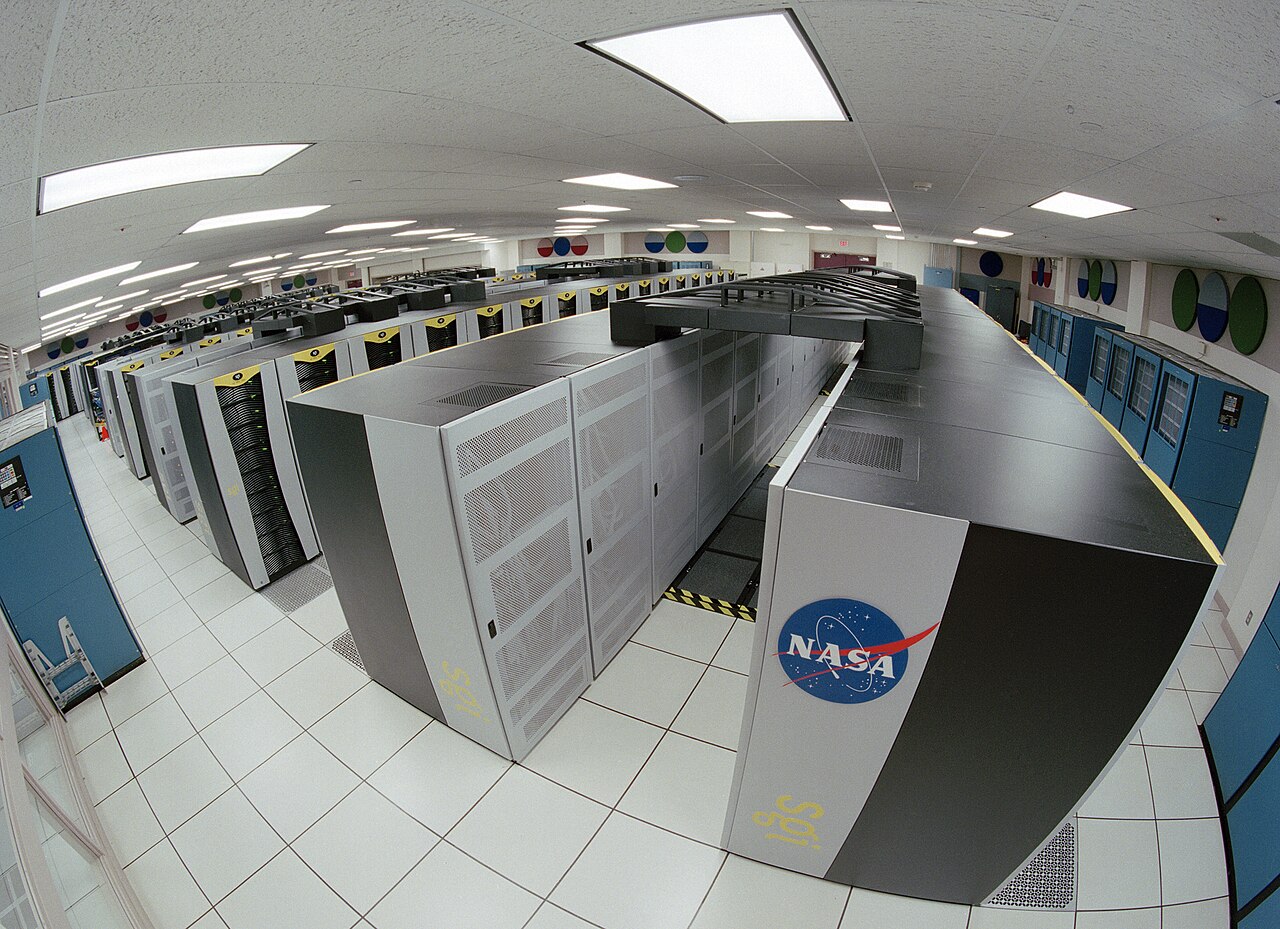
An AI supercomputer is a type of high-performance computing (HPC) system designed to run artificial intelligence workloads, such as training large neural networks and performing complex simulations. According to IBM's supercomputing overview, supercomputers are made up of interconnects, I/O systems, memory, and processor cores, and they use more than one central processing unit (CPU) grouped into compute nodes.
Unlike traditional computers, supercomputers contain tens of thousands of nodes that collaborate on solving a specific problem. Each node typically includes a processor or group of processors, symmetric multiprocessing, and a memory block. The nodes communicate through interconnects, which also link to I/O systems like data storage and networking.
HPC has expanded from its original focus on simulation-based science to also handle machine learning, as described in the NVIDIA HPC glossary. This change is driven by GPU technology, which processes data in parallel and is now standard for AI computations.
How HPC Clusters Work
An HPC cluster is a group of computers that are tightly linked and operate together as one system, as explained in the NVIDIA HPC glossary. Each node has processors, accelerators, memory, and storage, and a high-speed network connects them. Specialized software schedules jobs, distributes data, and monitors performance.
The AWS explanation of HPC describes how clusters include controller nodes that coordinate work, worker nodes (or compute nodes) that carry out processing, and interactive nodes (or login nodes) that allow users to connect. HPC clusters can be heterogeneous, with nodes offering different hardware, or homogeneous, with similar performance capacity.
HPC systems run two kinds of workloads: loosely coupled and tightly coupled. Loosely coupled workloads are independent tasks that can run concurrently, such as rendering individual video frames. Tightly coupled workloads require nodes to communicate frequently, as in many scientific simulations. Both types benefit from the parallel processing capability of large clusters.
Measuring Supercomputer Performance
Supercomputer performance is measured in floating-point operations per second (FLOPS). A petaflop is a thousand trillion flops, and a 1-petaflop system can perform one quadrillion calculations per second, as noted in IBM's supercomputing overview. The TOP500 project ranks the world's most powerful supercomputers twice a year using the High Performance Linpack (HPL) benchmark.
The TOP500 home page reports that the 67th edition placed LineShine, a system installed in China, at No. 1 with a debut measurement of 2.198 Exaflop/s on the HPL benchmark. LineShine uses custom LX2 processors and the proprietary LingQi interconnect, and it also leads the HPCG ranking with 22.00 Petaflop/s.
The TOP500 lists page shows that the list is published twice a year, typically in June and November, at major HPC conferences. The June edition was published in Hamburg, Germany, and the November edition in St. Louis, Missouri. These regular updates track the rapid evolution of supercomputing technology.
Energy Efficiency and the Green500
Energy efficiency is a growing concern for supercomputing centers, as modern systems consume significant power and require extensive cooling. The Green500 list ranks systems by energy efficiency, measured in GFlops per watt. The JEDI system, a BullSequana XH3000 with NVIDIA GH200 Superchips, held the No. 1 spot with an efficiency of 72.73 GFlops/Watt.
The Green500 list shows that efficiency can vary with system size and architecture. The ROMEO system, with an architecture identical to JEDI but twice as large, achieved 70.91 GFlops/Watt, slightly lower than JEDI. The Adastra 2 system, using AMD Instinct MI300A accelerators, achieved 69.1 GFlops/Watt.
The Oak Ridge National Laboratory's Frontier page highlights that exascale systems can also be energy-efficient. Frontier, which held the second position on the TOP500 list, achieved an energy efficiency of 54.98 GFlops/Watt on the Green500 ranking. This demonstrates that high performance and energy efficiency are not mutually exclusive.
| Rank | System | Architecture | Energy Efficiency (GFlops/Watt) |
|---|---|---|---|
| 1 | JEDI | BullSequana XH3000, NVIDIA GH200 Superchip | 72.73 |
| 2 | ROMEO | BullSequana XH3000, NVIDIA GH200 Superchip | 70.91 |
| 3 | Adastra 2 | HPE Cray EX255a, AMD Instinct MI300A | 69.1 |
| 4 | Isambard-AI phase 1 | HPE Cray EX254n, NVIDIA GH200 Superchip | 68.835 |
| 5 | Otus (GPU only) | ThinkSystem SD665-N V3, NVIDIA H100 | 68.177 |
| 6 | Capella | ThinkSystem SD665-N V3, NVIDIA H100 | 68.053 |
Frequently asked questions
What is the difference between HPC and supercomputing?
Supercomputing is a form of high-performance computing that uses a supercomputer, the fastest type of computer. HPC is a broader term that can involve multiple supercomputers or clusters. Both are often used interchangeably, as noted by IBM.
How are supercomputers ranked?
The TOP500 project ranks supercomputers twice a year using the High Performance Linpack (HPL) benchmark, which measures floating-point operations per second. The list is published at major HPC conferences.
Why are GPUs important for AI supercomputers?
GPUs are specialized chips designed to process large amounts of data in parallel, making them ideal for machine learning and AI computations. They are now the standard for AI workloads in HPC systems.
What is exascale computing?
Exascale computing refers to systems that can perform at least one quintillion (10^18) calculations per second. The Frontier supercomputer at Oak Ridge National Laboratory is an example of an exascale system.
How do HPC clusters handle large tasks?
HPC clusters divide computational work into smaller tasks that run simultaneously on different nodes. This parallel processing allows large-scale simulations and data analysis to be completed much faster than on a single machine.